K-Story
Climate & Weather
Seoul's Average Monthly Temperature
| Jan | Feb | Mar | Apr | May | Jun | Jul | Aug | Sep | Oct | Nov | Dec | |
|---|---|---|---|---|---|---|---|---|---|---|---|---|
| Highest | 2.1°C |
5.1°C |
11°C |
17.9°C |
23.6°C |
27.6°C |
29°C |
30°C |
26.2°C |
20.2°C |
11.9°C |
4.2°C |
| Lowest | -5.5°C |
-3.2°C |
1.9°C |
8°C |
13.5°C |
18.7°C |
22.3°C |
22.9°C |
17.7°C |
10.6°C |
3.5°C |
-3.4°C |
-
SPRINGMarch – May
Spring, the season of flowers, has the ideal climate for enjoying the lovely blossoms.
-
SUMMERJune – August
Summer in Korea is hot and humid, but its beautiful coastline offers over 270 beaches with diverse summer scenery. As the season overlaps with the rainy and typhoon seasons, checking the weather forecast in advance is recommended.
-
AUTUMNSeptember – November
Fall in Korea is a beautiful season even without any special events. The average temperature in fall hovers around 15 degrees Celsius, making it a pleasant time for some outdoor fun.
-
WINTERDecember – February
In winter, the average temperature drops to 0 to 1 degree Celsius and frequently plummets to sub-zero so you need to wear thick outerwear at all times.
Source: VISIT KOREA
Banking & Currency
Korea’s official monetary unit is the WON(₩/KRW).
Credit Card
Most of the businesses in Korea widely use and accept payment by credit cards, including at major hotels, department stores, and general shops. Visa, Mastercard, American Express and other credit cards can be used; however check the service availability before making purchases as some stores may not provide this service.
Currency Exchange
When you need to exchange your foreign currency into Korean WON(₩/KRW), visit a bank or authorized exchange service center. Banks are generally open 09:00-16:00 on weekdays. Operating hours may vary depending on the bank and region, please check in advance prior to visiting. Korea Post Bank operates 09:00-16:30. Please be aware that money exchange of old currency may not be accepted at certain locations. Make sure to check if banks or authorized exchange service centers accept old currency beforehand.
Currency Converter
www.xe.com/currencyconverter (Korean, English, Japanese, Chinese, German, French, Spanish, Portuguese, Italian, Swedish, Arabic, Dutch)
Source: VISIT KOREA
Electricity and Voltage
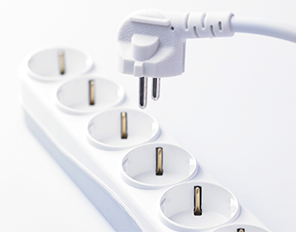
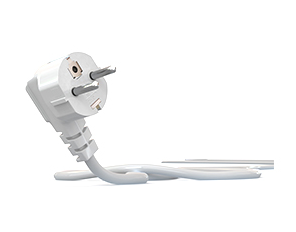
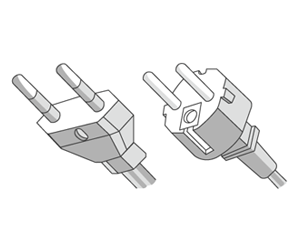
The standard voltage in Korea is 220 volts at 60 hertz, and the outlet has two round holes. If you do not have a multi-voltage travel adapter, you may ask to borrow or purchase one from your hotel's front desk. You can also find them at the airport, retail stores, major duty-free shops, and even convenience stores.
Source: VISIT KOREA
Emergency & Useful Phone Numbers
Emergency Services
- Police Department: +82-112
- Fire Department: +82-119
- Medical Emergencies: +82-119
- Infectious Disease Emergencies: +82-1339
1330 Korea Travel Hotline
- Tel: +82-2-1330 (Available in Korean, English, Russian, Japanese, Chinese, Vietnamese, Thai, Indonesian)
- Website: www.visitkorea.or.kr (Available in Korean, English, Russian, Japanese, Chinese [Simplified], Chinese [Traditional], French, Spanish, German)
Diplomatic Missions in Korea
- Website: www.mofa.go.kr (Available in Korean and English)
LOST 112 (Lost & Found Center)
- Tel: +82-2-182
- Address: National Police Agency, 97, Tongil-ro, Seodaemun-gu, Seoul
- Website: www.lost112.go.kr (Available in Korean, English, Japanese, and Chinese)
Local Telephone Directory (Assistance)
- Tel: +82-114
- Local area code search website: www.countrycode.org
Source: VISIT KOREA